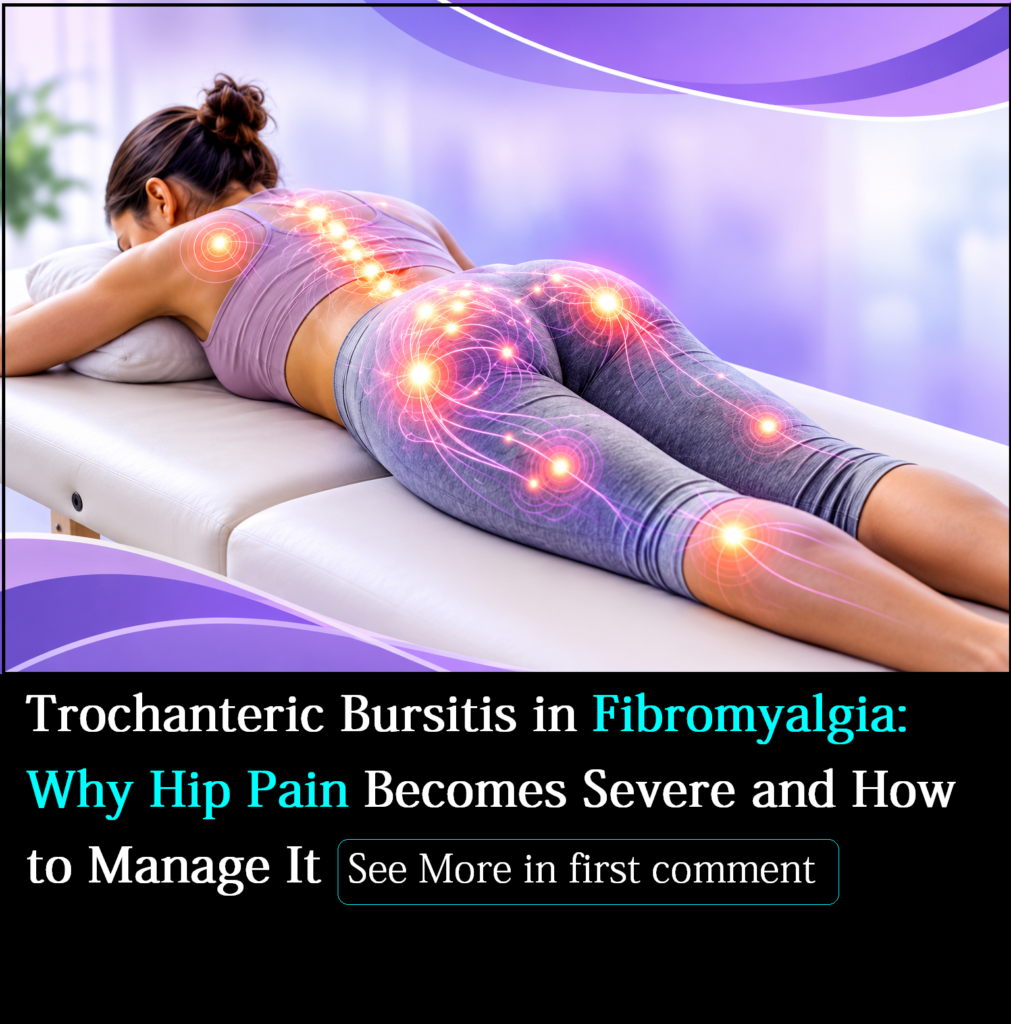
Many people living with fibromyalgia describe their pain in a strikingly similar way:
-
“It feels like my muscles are burning inside.”
-
“It’s like a deep burn beneath the skin.”
-
“It’s not normal pain — it feels like I’m inflamed from the inside.”
If you have ever tried to explain this sensation to someone, you know how difficult it can be. There are no visible wounds. Blood tests often come back normal. Scans rarely show clear damage. Yet the burning sensation is intense, persistent, and deeply real.
This article explores why that internal muscle burning happens in fibromyalgia, what science says about it, and why the pain is legitimate — even when medical tests appear “normal.”
What Kind of Pain Is Fibromyalgia?
Fibromyalgia is classified in the ICD-11 as a form of primary chronic pain associated with central sensitivity. In simple terms, this means the pain does not originate from visible tissue damage. Instead, it is driven by changes in how the central nervous system processes signals.
Rather than muscles being injured or inflamed in the traditional sense, the nervous system becomes hypersensitive. Pain pathways are amplified. Signals that would normally feel mild — or not painful at all — are interpreted as intense discomfort.
People often describe the burning sensation in several ways:
-
Deep muscle burn
-
Internal heat without fever
-
Invisible inflammation
-
Skin that hurts when touched
-
Discomfort that worsens with pressure
This is not “imagined pain.” It is a functional change in pain processing. The system that interprets sensations becomes overactive.
Why Does It Feel Like Muscles Are Burning?
The burning quality of fibromyalgia pain has a neurophysiological explanation.
1. Increased Excitability of Pain Neurons
In fibromyalgia, pain-transmitting neurons fire more easily and more intensely. The threshold for discomfort drops. A signal that would barely register in someone else may trigger a strong pain response.
2. Amplification of Normal Stimuli
This is sometimes called central sensitization. Normal muscle activity — walking, stretching, lifting light objects — can be interpreted as harmful. The brain reads routine signals as threatening.
When this happens, the experience can feel like:
-
Muscles are overheating
-
Tissue is inflamed
-
Something is “burning” beneath the skin
But structurally, nothing is actually burning.
3. Reduced Natural Pain Inhibition
The body has built-in systems to dampen pain signals. In fibromyalgia, these inhibitory pathways do not work as efficiently. Pain signals linger longer and feel stronger.
It’s as if the volume knob on the pain system is stuck on high.
Is It Muscle Inflammation?
This is one of the most common fears.
When pain feels like burning, people naturally think of inflammation. In conditions like rheumatoid arthritis or muscle injury, inflammation is measurable. Blood markers rise. Imaging shows swelling or damage.
In fibromyalgia, however, tests typically show:
-
Normal muscle enzymes
-
No visible tissue damage
-
No classic inflammatory process
The muscle fibers are not being destroyed. There is no autoimmune attack in the usual sense. The burning sensation is created by neural amplification — not muscle breakdown.
This distinction is important. It helps explain why anti-inflammatory treatments alone often do not solve the problem.
Why Does Light Activity Make It Worse?
Many individuals with fibromyalgia notice that even mild exertion can trigger intense burning the next day. Simple tasks — cleaning, grocery shopping, light exercise — may result in muscles feeling like they are on fire.
This happens because of an exaggerated response to effort.
After activity:
-
Pain may intensify instead of settling
-
Muscles may feel hot and inflamed
-
Stiffness increases
-
The body feels heavy
The nervous system takes longer to “switch off” the pain response. Instead of returning to baseline, it remains activated.
This phenomenon is not laziness or deconditioning. It reflects altered pain regulation and energy processing within the nervous system.
Allodynia and Hyperalgesia: When Touch Hurts
Fibromyalgia frequently involves two key pain phenomena:
Allodynia
Pain caused by something that should not hurt — like clothing brushing against skin or a light touch.
Hyperalgesia
An exaggerated response to something that is normally painful.
Because of these mechanisms:
-
Tight clothing can feel unbearable
-
A massage may be painful instead of relaxing
-
Light pressure can trigger burning discomfort
The skin may appear normal, but the issue lies deeper — within central pain modulation pathways.
Why Does the Burning Sensation Fluctuate?
Fibromyalgia pain is rarely static. It shifts. Some days are manageable. Others feel overwhelming.
The burning sensation often worsens with:
-
Poor sleep
-
Emotional stress
-
Physical overexertion
-
Hormonal changes
-
Mental exhaustion
Better sleep or reduced stress can sometimes lower the intensity. This variability reflects the role of the nervous system, which is highly responsive to internal and external stressors.
Sleep disruption, in particular, strongly influences pain amplification. When restorative sleep decreases, pain sensitivity rises.
The Emotional Impact of Burning Muscle Pain
Living with invisible burning pain can be emotionally exhausting.
Common reactions include:
-
Anxiety about having a serious inflammatory illness
-
Fear that something is being missed
-
Frustration with normal test results
-
Feeling dismissed or disbelieved
Because there are no visible signs, people may hear phrases like “But your labs are fine.” This can deepen the sense of isolation.
The pain, however, is legitimate.
Neuroimaging studies show measurable differences in how the brains of people with fibromyalgia process pain. Functional MRI research demonstrates increased activation in pain-related regions compared to healthy controls exposed to the same stimulus.
The experience is not exaggerated. The nervous system truly reacts differently.
The Role of Central Sensitivity in Fibromyalgia Symptoms
Fibromyalgia is not only about muscle pain. It often includes:
-
Fatigue
-
Brain fog
-
Headaches
-
Sensitivity to light and sound
-
Digestive issues
These symptoms reflect widespread central sensitivity. The nervous system becomes more reactive overall — not just to pain.
Think of it like a smoke detector that goes off too easily. It is designed to protect, but it becomes overly sensitive and triggers alarms in situations that are not dangerous.
Why Anti-Inflammatory Approaches Alone May Not Work
Because the burning feels inflammatory, many people focus solely on anti-inflammatory treatments. While lifestyle adjustments and balanced nutrition can support overall health, fibromyalgia requires a broader strategy.
Since the root issue involves pain processing and nervous system regulation, effective management often includes:
-
Sleep restoration
-
Gentle pacing of activity
-
Stress regulation techniques
-
Cognitive-behavioral approaches
-
Graded movement therapy
-
Certain neuromodulating medications
The goal is not to “fix damaged muscles” but to recalibrate the pain system.
A Nervous System Perspective Changes Everything
When you understand that:
-
The muscle is not being destroyed
-
The tissue is not actively inflamed
-
The pain is amplified by neural processing
…it shifts the conversation.
It moves away from searching endlessly for hidden structural damage and toward regulating the nervous system.
This perspective reduces fear. Fear itself can amplify pain pathways. When the brain perceives threat, it heightens sensitivity.
Education about central pain mechanisms has been shown to reduce pain intensity in some individuals because it lowers the alarm response.
Why the Pain Is Real — Even Without Visible Damage
One of the most harmful myths about fibromyalgia is that normal tests mean the pain is not serious.
Pain is not defined by imaging results. It is defined by nervous system processing.
In fibromyalgia:
-
Pain pathways are overactive
-
Inhibitory pathways are underactive
-
The brain interprets signals as dangerous
This combination produces the sensation of deep burning — even in the absence of tissue injury.
It is a functional disorder of pain regulation, not a fabrication.
The Essential Truth About Burning Muscles in Fibromyalgia
Here is what matters most:
-
Muscles are not literally burning.
-
The body is not inflamed like in classic autoimmune diseases.
-
The nervous system is amplifying pain signals.
The sensation of deep internal burning is a product of altered pain processing — a real and measurable neurophysiological shift.
Understanding this does not eliminate the pain overnight. But it provides clarity.
Instead of feeling confused or disbelieved, individuals can recognize that their experience has a scientific basis.
Moving Toward Whole Nervous System Care
Because fibromyalgia involves central sensitivity, care must address the whole system:
-
Consistent sleep routines
-
Gentle, graded movement
-
Stress reduction practices
-
Emotional support
-
Education about pain neuroscience
Recovery is not about forcing the body through pain. It is about slowly retraining the nervous system to feel safe again.
Progress may be gradual. Flare-ups may still occur. But knowledge reduces fear — and reducing fear can lower pain amplification.
Final Thoughts: You Are Not Imagining the Fire
If you live with fibromyalgia and feel like your muscles are burning from the inside, you are not exaggerating. You are not weak. You are not dramatic.
Your nervous system is operating in a heightened state.
The internal fire is not muscle destruction — it is amplified signaling. And while that distinction may seem technical, it changes how we approach healing.
Fibromyalgia is complex. The burning sensation is one of its most misunderstood symptoms. But science continues to confirm what patients have been saying for years:
The pain is real.
The experience is valid.
And understanding the nervous system is the key to moving forward.